
Why should families prepare for wildfires? Here is the short list:
- Modern forest fires now burn twice as much tree cover globally as they did in 2000.
- The average size of fires and the total acreage burned by a single event has grown significantly.
- The fire season is no longer limited to the traditional summer months.
- Since 2000, an annual average of 70,025 wildfires has burned an annual average of 7.0 million acres, more than double the average burned in the 1990s.
- Wildfire smoke in now a nationwide issue according to the American Lung Association. It is “America’s new, silent natural disaster.”
- Wildfires are “An immediate threat to life!”
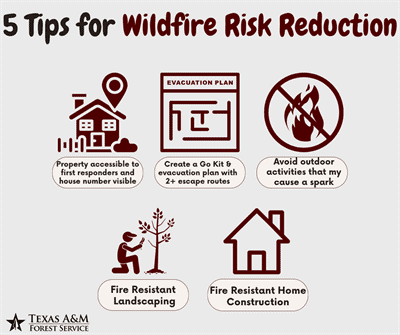
The risk of wildfires is increasing, more frequent, and more dangerous than ever before. Your family doesn’t even have to be near a forest for the danger of affecting your family’s breathing and the deaths associated with inhalation of wildfire smoke. At https://family-preparedness.com we have tips, recommendations and tools to help you prepare for wildfires. Here is a short list of recommendations you can complete before a wildfire threatens your property:
- Place connected garden hoses on all sides of the house.
- Keep firefighting tools handy. Make sure you have a ladder tall enough to reach the roof. Have multiple buckets and rakes available.
- Learn all (multiple or at least two different) evacuation routes out of your neighborhood.
- Place combustible patio furniture inside.
- Make sure your insurance policies and personal documents are available electronically if you must evacuate.
- Create a fire-resistant zone that is free of leaves, debris or flammable materials at least thirty feet from your home.
What to do if a wildfire is approaching your neighborhood:
- If a fire is approaching, park your car facing the direction of escape.
- Shut off gas at your home’s meter.
- Turn off all propane tanks.
- Drinking water may become an issue, so be sure to have plenty of water in jugs or containers on hand if your water sources dry up during a fire.
- Go to a nearby safety zone. Ponds, lakes, rivers, landscaping pools, swimming pools all can serve as a safety zone.
- Go to a pre-designated area such as a safe room, basement, storm cellar or the lowest level (closet, interior hallway) away from corners, windows, doors and outside walls.
- If you have pets, consider emergency items for them. Leashes and carriers will help prevent escape. Food, clean water, bowls, beds, blankets, toys and medical supplies should all be available in your home for your pets.
Our website has several resources to help you prepare in advance for a potential wildfire. The two most important resources for your family is an evacuation plan and an asset protection plan. The evacuation plan concept is explained on our website located here. The asset protection plan is one of several courses on our tiny courses webpage that can be purchased to help you create your own safety plans. Check out those tiny courses located here. They are only $27 and well worth the time you take to plan for the safety of your family.
With 70,000 wildfires generated every year, every family should consider steps to protect everything they own from this ever-increasing danger. Even if you don’t live near a forest, the risk of smoke inhalation needs to be considered.

Be smart, be proactive and plan ahead. Our website can help you get started, so check it out before it is too late!