
You may have seen the headlines about a “Kelvin wave” racing toward California. It sounds like a giant wall of water, so let us start with what it actually is and the potential danger involved. If you live on or near the coast, would your family know what to do if rising water met a winter storm?
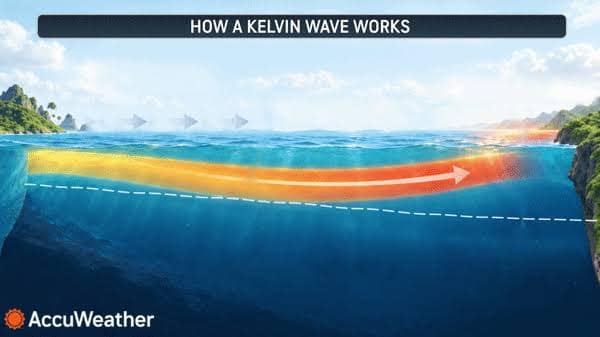
A Kelvin wave is not a surf-style wave you would see crashing on the beach. It is a slow-moving, planetary-scale pulse thousands of miles wide, and people on the coast may not even notice it. It reached the northern tip of South America in late August, and it is expected to reach Southern California by early October, lifting sea levels 5 to 10 inches for a time. Some forecasts say it could be closer to a foot.
Think a few inches sounds harmless? Here is the trouble. The bigger concern is what happens when those higher ocean levels meet winter weather. Start with a higher water level, add a storm surge or an extreme tide, and the water reaches farther inland than it normally would. Researchers expect the wave’s influence to persist through winter and into early next year. That is a long time for coastal flooding and erosion to be a risk. California’s governor has already declared a state of emergency to prepare resources for winter storms and coastal flooding.
The wave is tied to a strengthening El Niño, which is why this winter deserves extra attention. NOAA’s assessment gives a greater than 90% chance of a very strong El Niño from November 2026 through January 2027.
Let me ask you a few questions about your family’s readiness:
- Do you know whether your home, school, or workplace sits in a coastal flood zone? FEMA has a website that can help you identify if you are in a flood zone here.
- Would every family member know your evacuation route and where to meet if you had to leave quickly? Our website has a tiny course to help you create a family evacuation plan. It is only $27, takes about 10 minutes to complete and you can find it here.
- Do you have copies of your insurance and important documents stored somewhere safe in case you cannot get back home? Our website has a tiny course to help you create a family asset protection plan. Check it out here.
- Would you have three days of water, food, and comfort supplies ready to shelter with? Having resources for the family for over 50 disaster types that might require you to shelter in place is one of the most important preparation steps you can make. Check out our Shelter in Place Tiny Course here.
Bottom line, a Kelvin wave by itself is not a catastrophe. But it raises the starting line for every storm this winter, and the middle of the winter is not a good time to prepare, not when the water is rising. Do not procrastinate. Start or expand your family’s disaster preparation by implementing a shelter in place, an evacuation and an asset protection plan now (in October). You will be happy and more secure that you acted now instead of in the middle of the Kelvin wave’s after affects.