
In 2024 wildfires burned 9 million acres in the United States, which was three times more acres burned in 2023. In 2025 a reported 72,068 wildfires were reported in the U.S. With this ever-increasing number of annual wildfires there is no better time than now to become educated about the potential wildfire risks where you live. What is the risk of being uneducated or unprepared for wildfire? Here is a quote from an individual who fled the recent Palisades fire in California: “She fled the fire with little more than clothes on her back, navigating grid locked roads, burning hillsides and an evacuation process that was chaotic.”
Here is a short course in wildfire warning meanings and how your family may need to respond to these warnings if there is a watch or warning issued for the area you live in. There are three distinct types of alerts and warnings that are typically issued. The first type is called the Fire Weather Watch. This alert is issued when there is high potential for the development of a Red Flag Event within 18-36 hours. The intent of this watch is to alert families at least a day in advance for the purpose of preparing your resources for firefighting safety or a potential evacuation. The second type is called a Red Flag Warning. This alert is issued to indicate that an impending or occurring event with a high degree of confidence that weather and fuel conditions will occur in 48 hours or less. The third and most serious alert is called the ‘Particularly Dangerous Situation’ and is associated with the wildfire event as being extreme. This alert is rarely issued; however, the alert can be issued for flood emergencies, thunderstorm watches, derecho threats and high wind warnings.
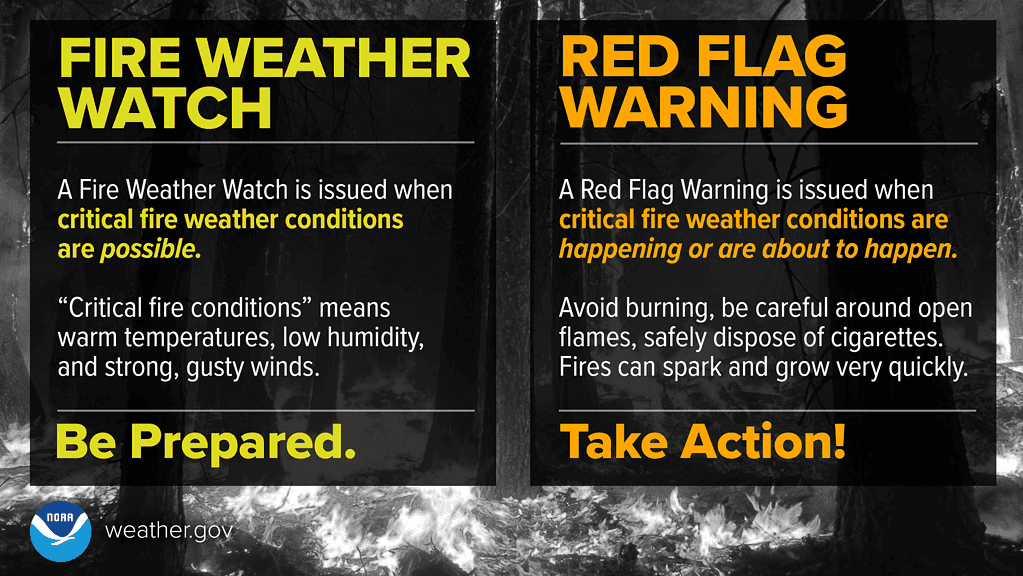
The key to monitoring these alerts when issued is to stay informed. There are several tools to do so:
- There are 122 local National Weather Service forecast offices in the U.S. You can access the information (watches, warnings, and outlook) by each of the offices on their website here.
- The National Weather Service also has a Storm Prediction Center that describes different levels of fire risk. Those risks are Elevated, Critical and Extremely Critical. The wildfire outlook is monitored daily and can be found here for the area or state in which your family lives.
- Every state offers online resources to stay informed about potential wildfires. Check out the Department of Natural Resources website for your state, the Incident Command System website for your state plus county government websites in your state.
- In addition, the InciWeb website monitors existing wildfires.
If you are threatened by wildfire and you choose to stay at home, here are some recommendations to help you protect your family and your home:
- Keep your smoke detectors up to date.
- Keep N95 masks available for going outside.
- Invest in an effective air purifier. Most air purifiers will purify the air in a single room in your home. They can be purchased on Amazon for around $100, and you may wish to have several purifiers in your home placed in strategic rooms.
- Install the right HVAC smoke air filters. HEPA air filters trap fine particulate matter and use an activated carbon filter. You can find them at Home Depot here.
- Install escape ladders outside the windows of every upper floor room. These ladders can also be purchased at Home Depot here and vary in price from $50 to 200+.
On the other hand, if it is recommended (or you are forced to) evacuate your home then here are steps you should take before leaving your home:
- Set up multiple means of family communication in advance. Our website has a course for that. You can find the Basic Communication Plan Tiny Course here.
- Place your go bag where it is easy to grab. Do you have a go bag? Our website has a webpage on how to create or purchase one here.
- If time permits, close and lock your windows and doors.
- Shut off your utilities.
- Keep your car’s gas tank full and/or have a backup supply of gas in your garage.
- Plan in advance, alternate evacuation routes to avoid long lines of cars and roads full of escaping families.
The frequency and size and duration of wildfires is increasing every year. Your family needs to consider the threat to your home and family, and the first step is to become educated on the threat of wildfire. The next step is to act on this ever-increasing threat to your home and family and actually put a shelter in place plan and an evacuation plan in place. You can do both on our website for a minimal cost and a little amount of your time. We got you covered. All you need to do is ACT!