
Why is there a long recovery process after a tornado or a hurricane? It’s because the government is usually slow to respond. When they do respond multiple federal government agencies are asked to get involved (FEMA, SBA and U.S. Department of Agriculture). On top of that, when an emergency declaration is issued, those first announced dollars cover aid to repair government facilities and utilities, not to homeowners, farmers and businesses in the tornado or hurricane strike area. To complicate things further, the distribution of disaster funds is administered by multiple local officials (state, county, and city). Keep in mind that FEMA is not designed to replace everything if homes are uninsured or under insured. Need more proof about long recovery processes? Did you know that “blue tarps are still on damaged homes from 2020 hurricanes and recent tornadoes?’
Here is a short list of other issues that can and will prolong the recovery process:
- Immediately after a storm, you can expect many of the roads in the strike area to be blocked by debris.
- Clean up is usually very slow as trucks hauling debris slow to a crawl.
- Can you imagine trying to recover with no home, no car and no nothing?
- How will you be able to pay for daily expenses during the immediate recovery process, let alone a long term recovery time frame?
- If you have really good homeowner’s insurance, some insurance companies offer rental housing for up to a year, but what happens if your home is not repaired or replaced within a year?
- Frequently, unscrupulous contractors will descend on a stricken area and perform shoddy or incomplete repairs or rebuilds.
Since there are typically over 1000 tornado sightings every year (plus several nasty hurricanes), families in tornado and hurricane prone areas should be prepared to have an actionable recovery plan(s) in place.
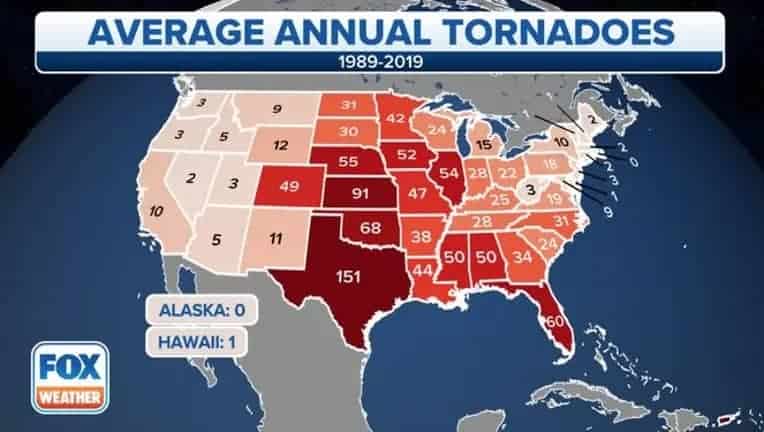
The states with the most tornadoes are Texas, Kansas, Oklahoma, Florida, Illinois, Colorado, Iowa, Alabama, Missouri and Mississippi. If you live in one of those states, then we recommend that you create an actionable recovery plan to expedite the recovery process. Here are our (and the experts’) recommendations:
Here is what your family should do before a tornado (or hurricane) impacts your community:
- Document your property. Take pictures of your property inside and outside, room for room and be sure to have that documentation available offsite if your home or domicile is destroyed.
- Gather your ownership and personal identification proof. Retain copies inside and outside of your home. (Our Asset Protection Tiny Course lists the various ownership and identity documents you should retain).
- Implement a shelter in place protection plan and practice how to shelter if the tornado warning sirens go off.
Here is what your family should do after a tornado (or hurricane) impacts your community:
- Find out where to seek assistance on the city, county, state, and federal level. Be sure you have access to those phone number and government addresses offsite. This step can and should be taken before the disaster to expedite the process. Local chapters of the American Red Cross, Salvation Army and the United Way frequently step in to provide immediate physical and financial relief.
- Talk to your insurance agent about how to file your insurance claims. Is there anything the agent can help you prepare in advance of a disaster? Get that done before the disaster if possible. You can also visit DisasterAssistance.gov to apply for assistance from FEMA.
- Rebuild for the long term. Rebuilding can take years, not months, so you better be prepared to have a contingency plan of where to stay or live if the rebuild is going to take a year or more.
Bottom line is that every family that has a desire to stay safe should not only have tornado and hurricane preparedness plans in place, but you should also have an asset protection plan in place if one of those disasters impacts your home. We not only encourage having a tornado preparedness plan, we also encourage you to have a tornado recovery plan in place to help you protect everything your family might own. The frequency of tornadoes in your state might dictate whether that tornado recovery plan is not a nice-to-have, but a must have!