
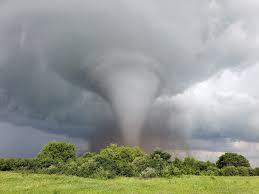
If you are in your home and a tornado warning is issued, most people know what to do. Experts recommend hiding in a basement or underground shelter. If an underground safe area is not available, they recommend a room that is in the very middle of your home such as a closet or interior hallway. But what should you or any of your family members do when they are outside of your home? It all depends on where you are outside of your home. Here are the scenarios:
Scenario #1: Your family or a family member is driving; Stop driving. Pull over, keep your seat belt on, stay low, and cover your head with your hands or a blanket. Avoid hiding under bridges or over passes because protection is minimal and traffic problems could ensue.
Scenario #2: Your family or a family member is outdoors: Try to find a low, flat area away from trees and buildings. Lie down and cover your head with your hands.
Scenario #3: You live in a mobile or manufactured home: Evacuate! These types of homes are unsafe during a tornado. Consider going to the closest school, the closest church, a community storm shelter, or a public building if you have time. Find out in advance if your community has storm shelters and let each family member know where they are located.
Scenario #4: You live in a two-story or multi-story building: Go to the lowest level possible – the basement or the lowest parking level in a multi-story building, Do not forget to take your go-bag and critical documents with you. If possible and time permits, go to a friend’s or acquaintance’s home that has a basement.
Here are some tips on what NOT to do when a tornado warning has been issued:
- Do not hide in buildings such as shopping malls or stadiums. Their large roofs are more likely to collapse during a tornado.
- If you have left your home, do not return until authorities say it is safe to return.
- Do not anticipate using your telephone or cell phone during or after a tornado. Those lines and towers may be overwhelmed during a disaster. Instead use text messaging or social media to communicate with family and friends.
- If a tornado does pass by, DO NOT use matches, lights, appliances or operate light switches. Sparks from electrical switches could ignite gas and cause an explosion.
One of the best ways to prepare for a tornado is to plan in advance. You need to meet with all family members and discuss what they should do if they are in the home or outside the home when a tornado strikes. Your family plan should include discussions and advice on what to do in their home and where to go for safety if they are not home. Here is another tip. Tornadoes that destroy homes create a huge recovery problem. Insurance claims, proof of ownership of your assets, identity proof for family members are often required to recover from the potential damage a tornado can inflict. Another tip! Have an asset protection plan in place. We have a tiny course that will help you create your own plan to protect everything you own.
At https://family-preparedenss.com we have resources to help a family prepare for a potential tornado disaster. Check out our Tornadoes Preparedness, our Shelter in Place and our Evacuation webpages for some basic advice. Need a plan? We got you covered. Our tiny courses include courses on Tornado Preparedness, Shelter in Place Preparedness, Evacuation Preparedness, and Family Communication Preparedness. These courses are only $27 each and take only 10 minutes or so to complete and you can find them here.
Be safe. Know exactly what to do before a tornado watch is issued and more importantly what to do when a tornado warning is issued. NOAA’s Storm Prediction Center documented 1559 tornadoes in 2025. That is almost 125 tornadoes every month! The safety of your home and your family may depend upon your advanced preparation!